


From a pioneering South Australian research project to an internationally recognised autism assessment tool, Professor Robyn Young’s work is helping children and families around the world. Now, the 2026 Firefly Children’s Foundation Excellence in Research Award recipient is determined to ensure its impact continues for generations to come.
Of all the milestones in Professor Robyn Young’s remarkable research career, it’s not the international recognition, academic publications or even the development of a pioneering autism assessment tool that makes her most proud.
It’s the people she’s helped along the way.
The families who still send her updates about their children. The young adults who once attended her early intervention program and now invite her to their milestone birthdays. And the grandmother who approached her at a young girl’s funeral to tell her how much of a difference she’d made.
“She just said, ‘You made her life better,’” Robyn recalls. “The fact that you’d had an impact on these kids is just really lovely.” It’s this deeply personal connection to children and families that has driven more than three decades of research into the early identification of autism – and her determination to ensure the discoveries made along the way are accessible to everyone, regardless of where they live or what they can afford.Today, the Autism Detection in Early Childhood (ADEC) assessment tool developed by Robyn at Flinders University is being used across the world, helping clinicians recognise the early signs of autism in children as young as 12 months. And despite its international reach, Robyn has made the tool freely available to clinicians and researchers.
“I’m an academic. I didn’t go into that for the money,” she says with characteristic candour. “The whole point of this was about the children, and I know how important early detection is.”I’d hate to think that some people had been prevented from getting a diagnosis because they couldn’t afford it, or because people weren’t aware of these early signs. “To make it free and efficient was certainly something that was really important to me, just to make it accessible.” That commitment to improving children’s lives has earned Robyn the 2026 Firefly Children’s Foundation Excellence in Research Award, recognising a career of groundbreaking research that the Foundation first helped support more than 25 years ago.
Recognising the signs earlier
Robyn’s journey into autism research began somewhat unexpectedly. While completing her PhD studying savant syndrome – a condition in which individuals demonstrate exceptional abilities in particular areas – she travelled to the United States, where she spent time at Stanford University working with families with autistic children. It was there that something caught her attention. While older siblings were being assessed for autism, Robyn began noticing behaviours in much younger children, including babies, that suggested they too might be autistic.
At the time, autism diagnosis largely relied on developmental signs such as delayed language and difficulties with peer relationships – behaviours that often weren’t apparent until children were older. “I was thinking, what is it about these children that makes me think this baby is autistic?” she recalls. Back in Adelaide, a conversation with paediatrician Dr Billy Tao, whose son Trevor was an autistic savant, helped set her on a new research path. He encouraged Robyn to develop a way of recognising autism much earlier, so children and families could access support sooner.
In 1999, she received her first grant from what was then the Channel 7 Children’s Research Foundation, now Firefly Children’s Foundation. That early investment helped Robyn identify behaviours associated with autism in very young children, including response to name, shared attention, imitation and the ability to follow gestures. The research eventually led to the development of the ADEC, published in 2007.
Designed for children aged 12 to 36 months, the play-based assessment takes around 15 minutes to administer and helps identify children who may benefit from further diagnostic assessment. Importantly, it offers a practical and accessible way to recognise early signs that might otherwise go unnoticed. “It’s recognition of these really early signs of autism,” Robyn explains.”We didn’t have that understanding before. And now we know what autism looks like early on, so we can get in early.”
From Adelaide to the world
Firefly’s support continued with grants in 2000 and 2003, helping Robyn build on her early detection research and establish an early intervention program at Flinders University. The program, which operated until 2015, provided intensive support for young children and their families, with a strong focus on parent education and involvement. For Robyn, the relationships formed during those years remain among the most rewarding aspects of her career. “I’ve been invited to 18ths and 21sts for some of the kids that went through this program,” she says.”When you get the odd email here and there, or a little video of their child, or someone coming in as a grandparent saying how much easier their life was, I feel very privileged.” What began as a South Australian research project has since attracted international interest.
The ADEC has been used in countries including the United States, Mexico, Ecuador, Indonesia, Japan, China and Turkey, with translations helping make it accessible across different languages and cultures. Further work is underway to extend its reach. “It’s pretty surreal in a way,” Robyn admits. “You look at a map of where it’s being used, and it’s quite a visual thing. The fact that somebody in Iran wanted to come over and work because he’d heard about this tool, and people in Turkey know the work and love the tool – it’s certainly flattering, but a bit surreal.” For Robyn, however, international recognition has never been the ultimate goal. It’s about ensuring children can be identified earlier and families can access the support they need.
Breaking down the barriers
In 2022, another Foundation grant helped Robyn and her international collaborators take the research in an exciting new direction. When COVID-19 disrupted face-to-face autism assessments, researchers in the United States approached Robyn about adapting the ADEC for virtual delivery. Rather than dismissing the idea, she saw an opportunity to explore whether the assessment could be delivered reliably online. The resulting ADEC-Virtual (ADEC-V) was tested alongside in-person assessments, with research demonstrating strong agreement between the two approaches.The implications extended well beyond the pandemic. Suddenly, families in rural and remote communities, or those unable to easily access specialist services, had another pathway to early assessment. It also allowed clinicians to observe children in their familiar home environments, offering valuable insights into their everyday interactions with parents and caregivers.
“This had huge ramifications that I hadn’t even anticipated because it enabled people to do it remotely,” Robyn says. “All of those things that I hadn’t really foreseen or thought about before came to fruition.” The development also reinforced Robyn’s determination to remove financial barriers to early identification. Having retained the intellectual property rights to her assessment tool, she has now made the ADEC freely available through Flinders University. It’s a decision that reflects the philosophy underpinning her entire career: research should make a tangible difference in people’s lives.
The power of a research grant
Looking back, Robyn is quick to acknowledge the role the Foundation’s grants played in turning an early idea into research with international impact. Those first grants provided the opportunity to test her theories, develop the assessment tool and build the evidence needed to take the work further. And she believes supporting promising research at an early stage remains critical. “These grants are so pivotal,” she says. “They’re giving early career researchers and other researchers a chance to get that kindling going that might become really big projects. “These really early ideas, to be able to translate them into research that has real-world impact, is really important, and that’s why these sorts of grants are so critical.” Receiving the Firefly Excellence in Research Award came as a genuine surprise. “There’s no way in hell I thought that I would get this award,” she laughs. But beyond the personal recognition, Robyn sees it as acknowledgement of everything that has grown from those early research grants. What began with one researcher interested in autism has developed into the Flinders Autism Research Initiative, bringing together academics, postdoctoral researchers and PhD students exploring autism across the lifespan.
A legacy for the next generation
For Robyn, the next chapter is about ensuring that work continues long after she steps away.”I’m frightened that when I retire that it won’t continue, and so I’m really working hard to make sure that we’ve got that legacy here, that things will continue,” she says. Today, the Flinders Autism Research Initiative is exploring issues ranging from early identification to employment, inclusion and the experiences of vulnerable autistic people. Importantly, the research is increasingly shaped by autistic people themselves, with lived experience informing the questions researchers ask and the work they undertake. “All of our research is co-designed,” Robyn says. “Several of my PhD students are also autistic. That wouldn’t have happened openly 10 or 15 years ago. So that’s a huge move forward.”
It’s a future built on greater understanding, inclusion and a commitment to ensuring autistic people have a voice in the research that affects their lives. And while Robyn may be surprised by the recognition coming her way, the legacy of her work is already clear. From a small research grant awarded in South Australia in 1999 to an assessment tool now reaching children and families around the world, her career demonstrates the extraordinary difference that investing in children’s research can make. For Robyn, though, the measure of success remains beautifully simple. Knowing she’s helped make someone’s life a little better.
“The whole point of this was about the children, and I know how important early detection is.”
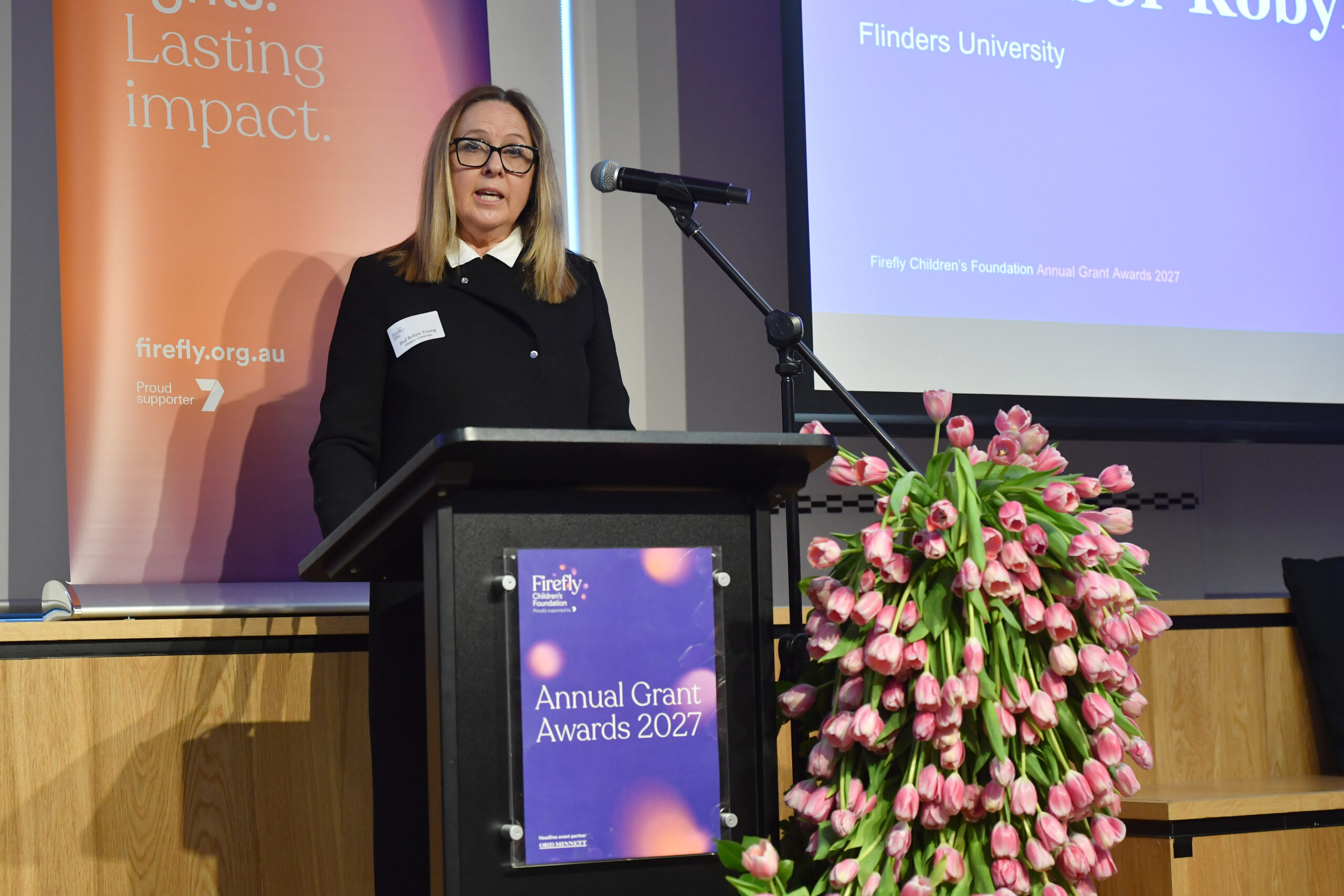
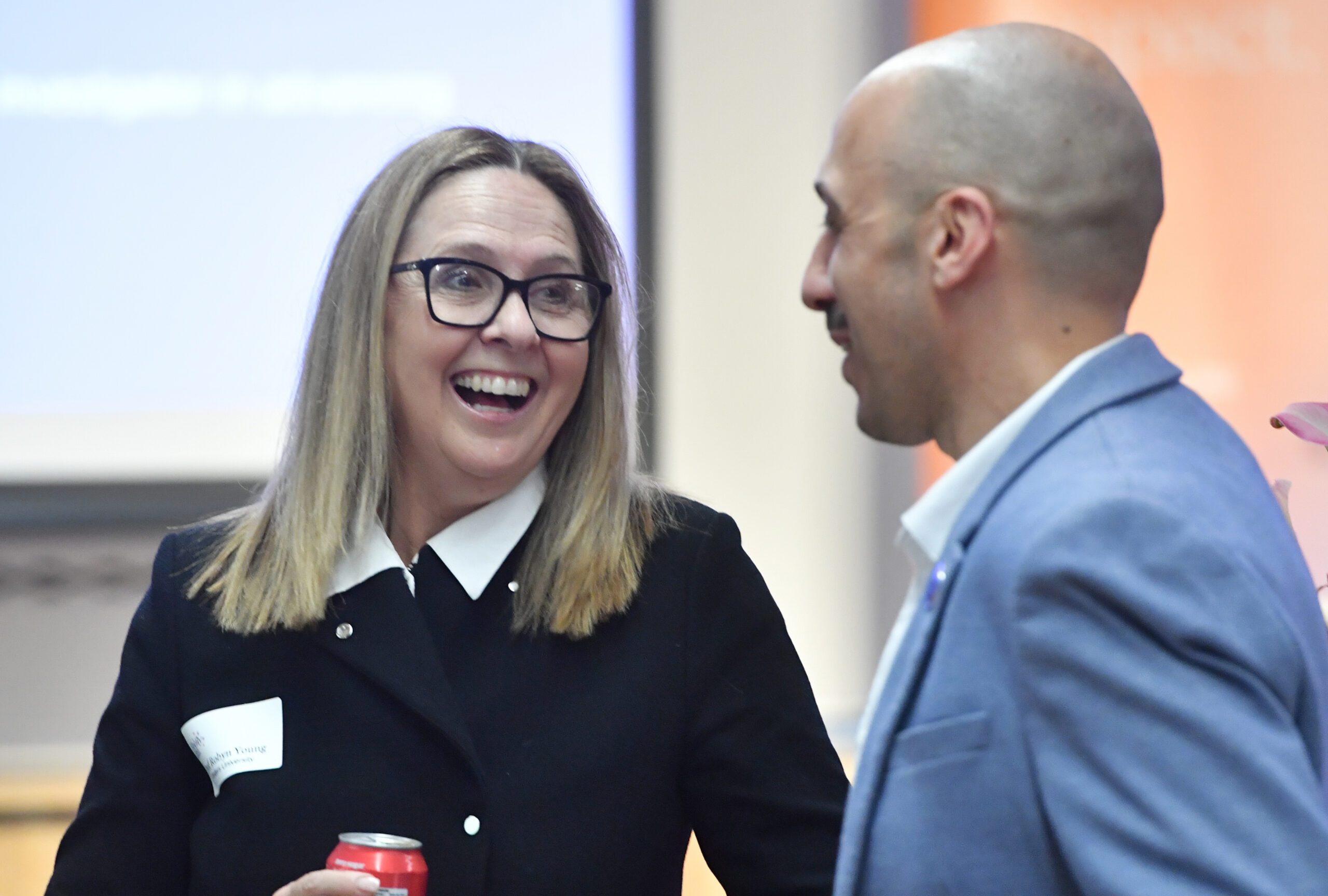
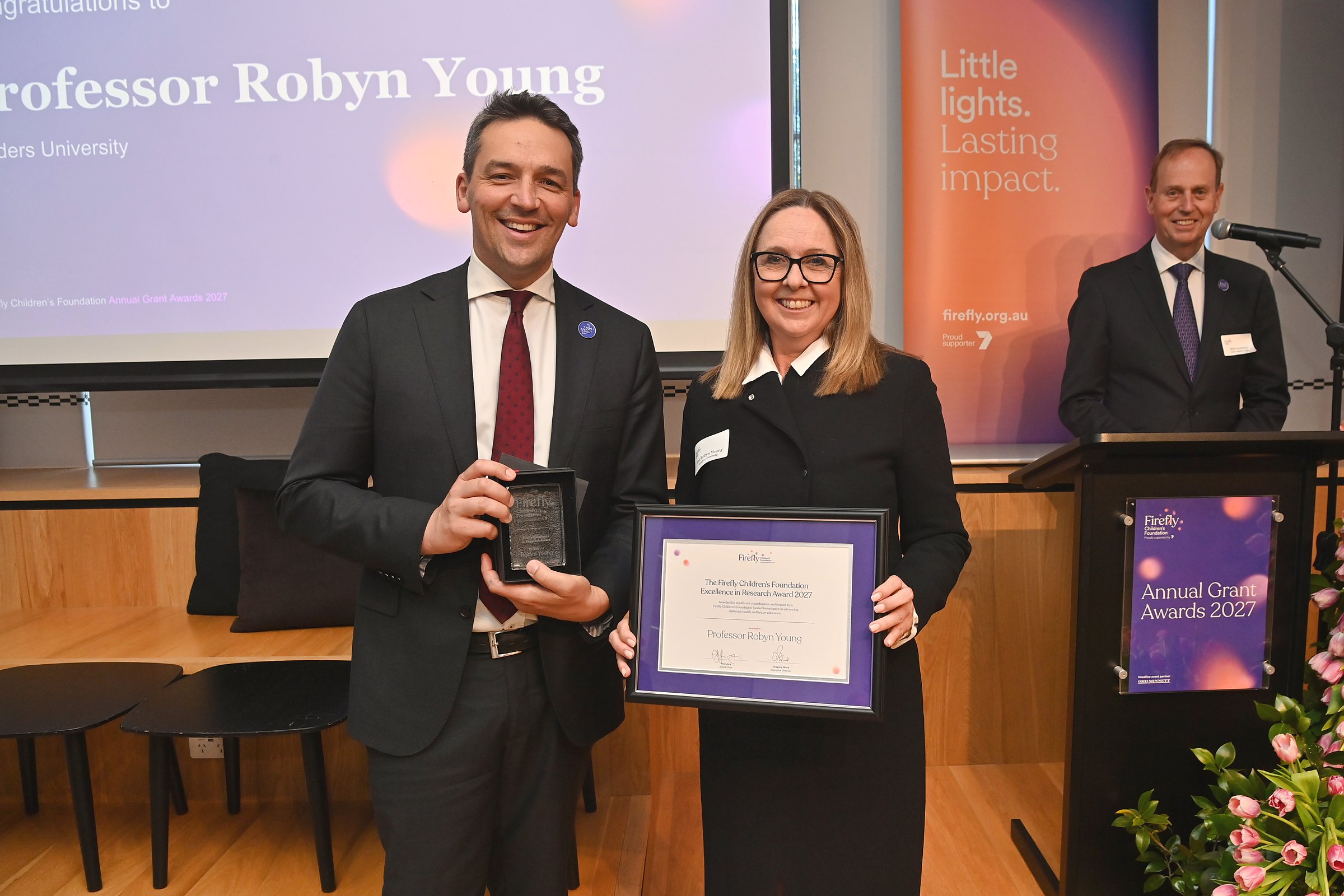
A proud moment at the recent Firefly Annual Grant Awards, as Robyn is receives The Firefly Excellence in Research 2027 Award for her contribution and impact in advancing children’s health and welfare for her creation of the Autism Detection in Early Childhood.
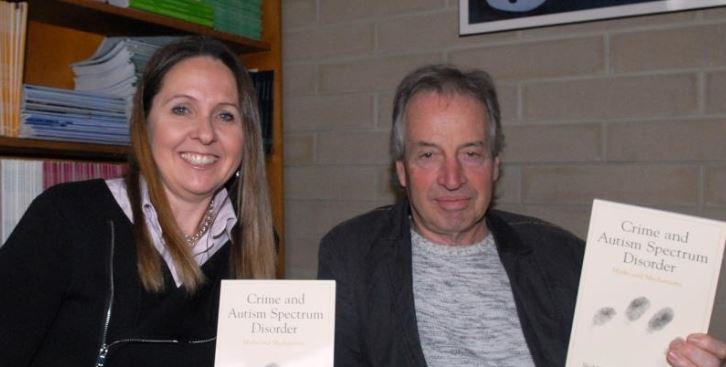
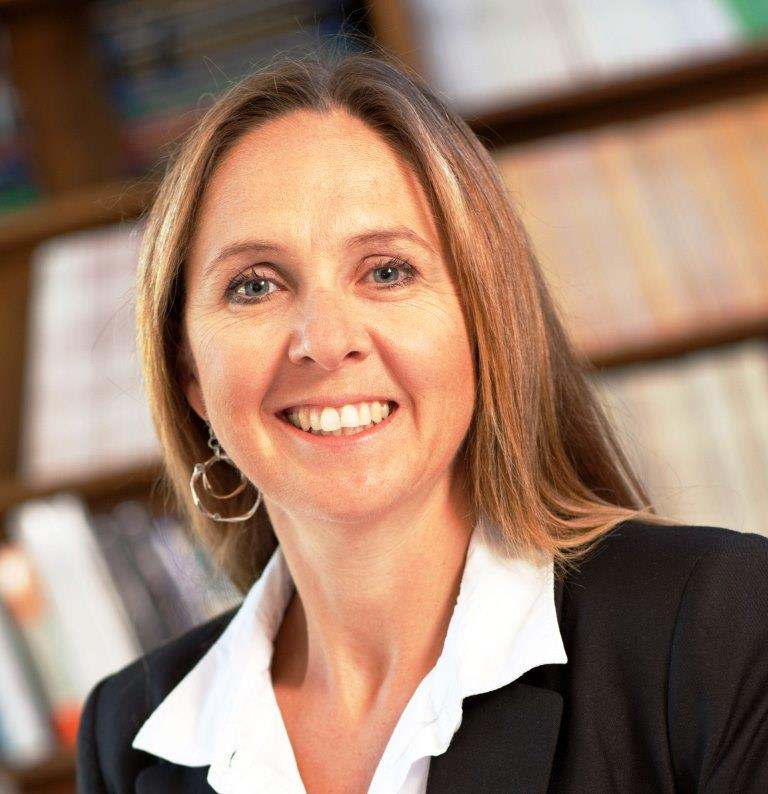
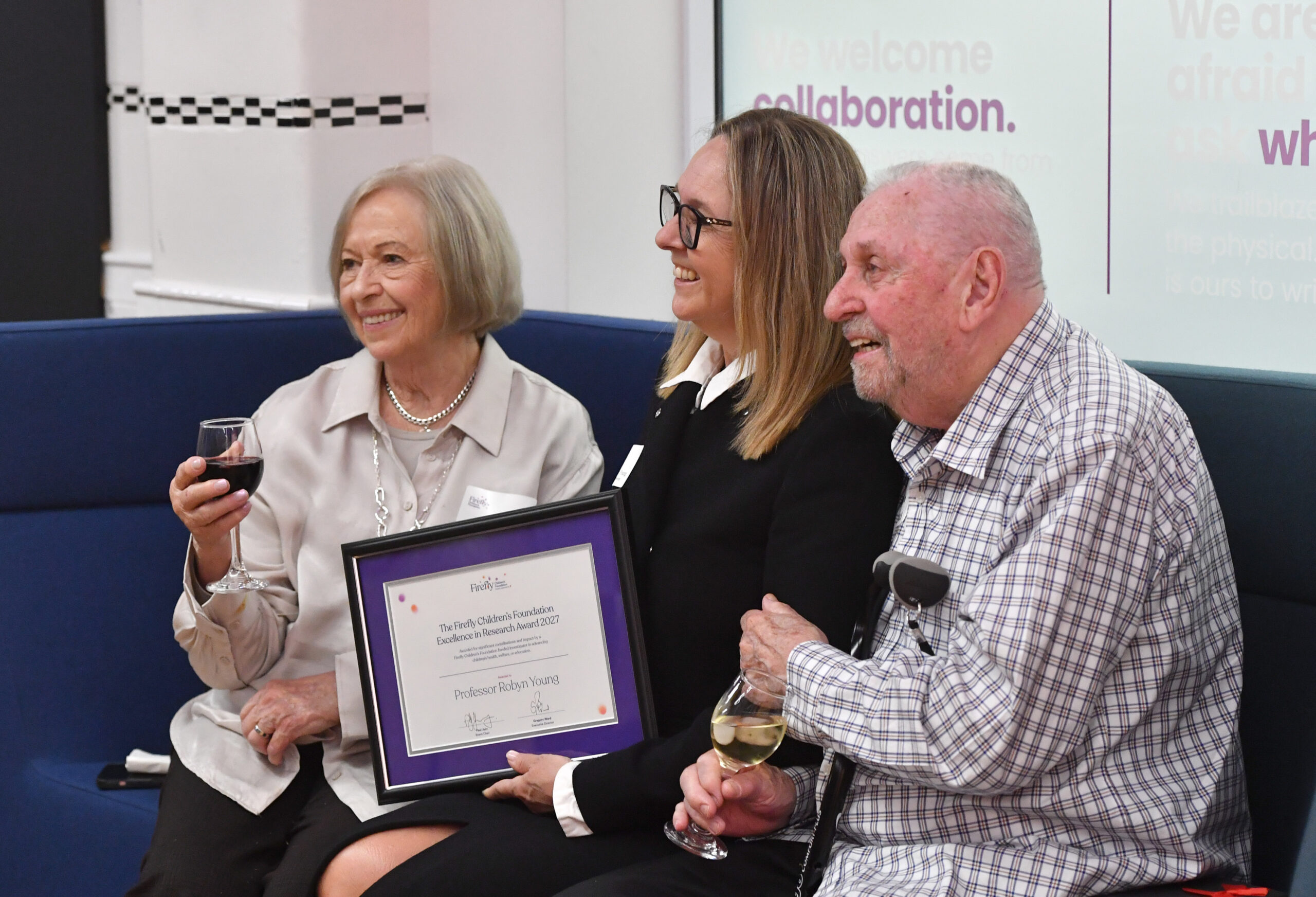
Robyn Young pictured with Professor Neil Brewer (Flinders University) and (right) as an Associate Professor in the initial stage of her early detection research.