



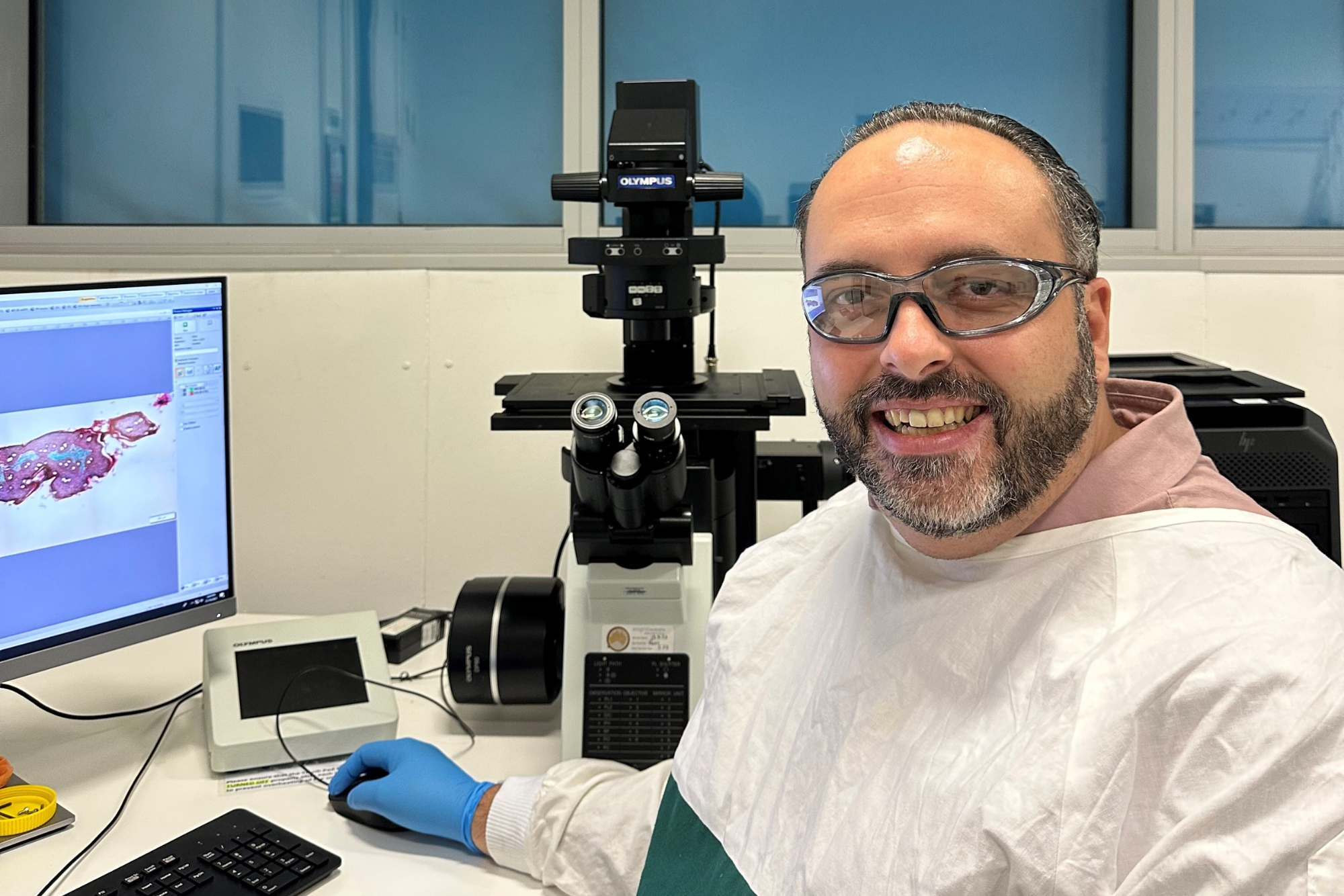
As his Fellowship draws to a close, Dr Kopecki isn’t winding down. Instead, he’s taking the next step, working with industry to advance groundbreaking research that could revolutionise the way chronic wounds and infections are treated in children with EB.
“I’m actually kind of excited and energised to take this research to the next step and to be working closely with industry, I’m really positive on the future outcomes,” the Adelaide University Industry Research Fellow shares.
And Dr Kopecki acknowledges that without the backing of the Foundation, he wouldn’t be facing such a bright next step.
“We absolutely wouldn’t be here – we wouldn’t have the breadth of research program that was conducted, and we wouldn’t be at the stage of talking about clinical trials planning if it wasn’t for support from the Firefly Children’s Foundation.”
— Dr Zlatko Kopecki
During his five-year Fellowship, he focused on Epidermolysis Bullosa (EB) – a rare genetic condition that leaves children’s skin so fragile it blisters and tears at the slightest touch. Often referred to as “butterfly children” because their skin is as delicate as a butterfly’s wings, many hours are spent every few days undergoing painful dressing changes simply to keep infections at bay.
EB is a lifelong condition, and in its most severe form, even something as simple as having a shower can be impossible.
“The pressure from a normal shower could hurt them,” Dr Kopecki explains. “So they have baths every two or three days to change their dressings – and it’s a three-hour event.
“They’re soaked in a concentrated bleach and salt solution that stings their skin. But it has to be done to keep the wounds infection-free.”
The constant battle against infection brings another challenge: antibiotic resistance. Many children with EB rely on topical and systemic antibiotics throughout their lives, limiting the options available when infections occur.
“Finding new ways to manage their condition and help them live a better quality of life is really critical.”
— Dr Zlatko Kopecki
His team has developed an innovative silver wound dressing that responds to changes in the wound environment, releasing significantly lower doses of silver only when needed and infection develops.
Current dressings can expose fragile skin to unnecessarily high concentrations of silver, damaging healthy cells as well as bacteria.
The new technology aims to control infection more safely, allowing dressings to remain in place for longer and over larger wound areas.
“Science has advanced so far in so many areas yet we still have to put these children in bleach and salt baths in order to cleanse their skin and perform dressing changes”.
— Dr Zlatko Kopecki
“This is the drive behind what I do – I really hope that one day we can find novel solutions for these patients.”
While there is currently no cure for EB, Dr Kopecki says advances in genetic therapies overseas offer hope for the future – although they are not yet available in Australia.
“It might be years before they’re available here, and that’s why it’s so important that we manage these children the best we can in the meantime,” he says.
“The work we are developing is focused on wound infection. It’s about helping these kids achieve best quality of life, but it’s not a cure but management of disease – the technology could also benefit children with burns and other serious injuries.”
Meeting the children whose donated samples helped drive the research became one of the defining moments of his Fellowship.
“It reminds you exactly why you’re doing this,” Dr Kopecki says.”Academic research can sometimes feel abstract. But when you meet these families, when you see these children and their wounds, you think, ‘I’ve got to keep going’.”
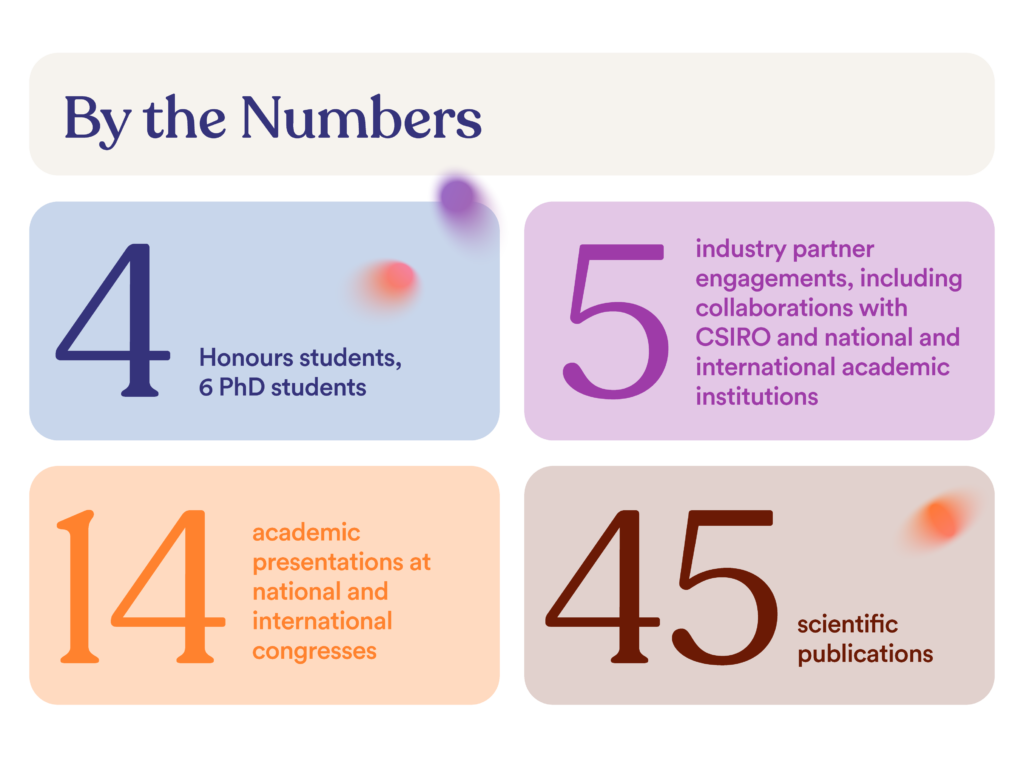
Another unexpected highlight was inspiring the next generation of researchers. Four Honours students and three PhD candidates have worked as part of Dr Kopecki’s team.
“Students can choose to do any research they want. They could choose something perhaps more ‘sexy’ – wounds are not always that interesting,” he says.“Seeing people excited about what we’re doing and wanting to do more with us, and seeing their passion to study more and help us develop these treatments has been incredibly rewarding.”
— Dr Zlatko Kopecki
Reflecting on the past five years, Dr Kopecki says the Fellowship has created a lasting impact well beyond the research itself.
“It’s allowed me to develop a program of research, increase the capacity for wound infection research in South Australia, train a new generation of students and build a team around me,” he says.
The security of the Fellowship funding also allowed him to spend more time driving the research forward, rather than constantly chasing grants.
“As a scientist, 50 per cent of my time is spent writing grants, and often only 10 per cent of those are successful,” he explains.
“It gave me security professionally. It allowed me to develop as the next research leader in this area and attract funding from other sources.”
That investment has helped take his research to the next stage. Dr Kopecki is now working with industry partners, while remaining an Industry Research Fellow in Wound Healing with Adelaide University, with hopes of progressing his EB research to human clinical trials in 2027.
He says none of it would have been possible without Firefly Children’s Foundation.
“The Fellowship gave me stability and the opportunity to build my own research program.”
— Dr Zlatko Kopecki
“It’s difficult to put into words what that has meant, both professionally and personally. We achieved every aim we set out to achieve, and now the work continues.
“The Fellowship may have finished, but the research hasn’t.”