




It began with dead embryos, a distraught PhD student and a chance conversation with a cleaner in a university corridor.
What followed would take Professor Rebecca Robker and her team into an entirely new field of research, spark widespread public interest and ultimately put their findings before a Federal Senate inquiry.
And, as Robker is quick to point out, none of it would have been possible without early funding from what was then the Channel 7 Children’s Research Foundation – now Firefly Children’s Foundation.
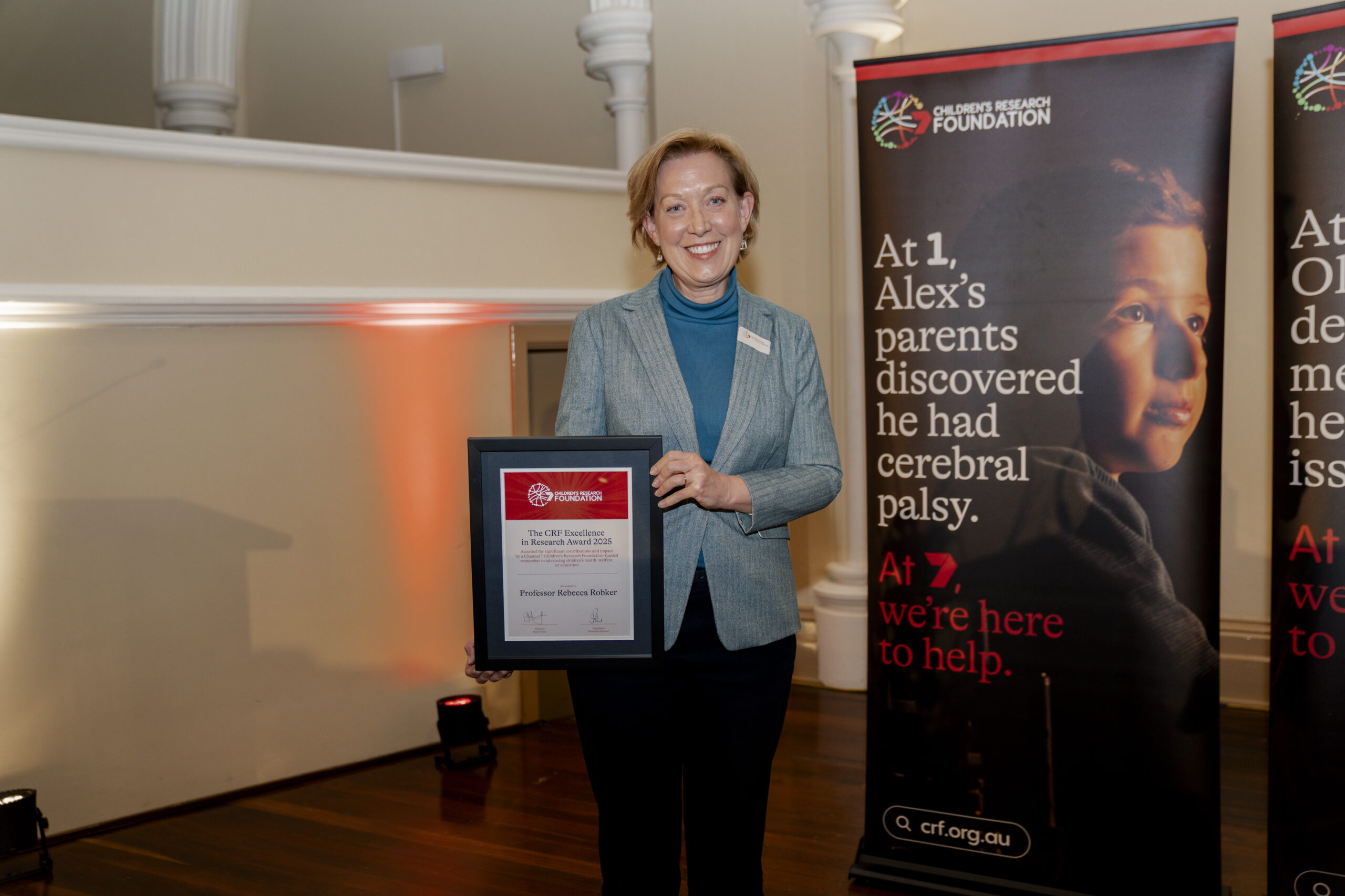
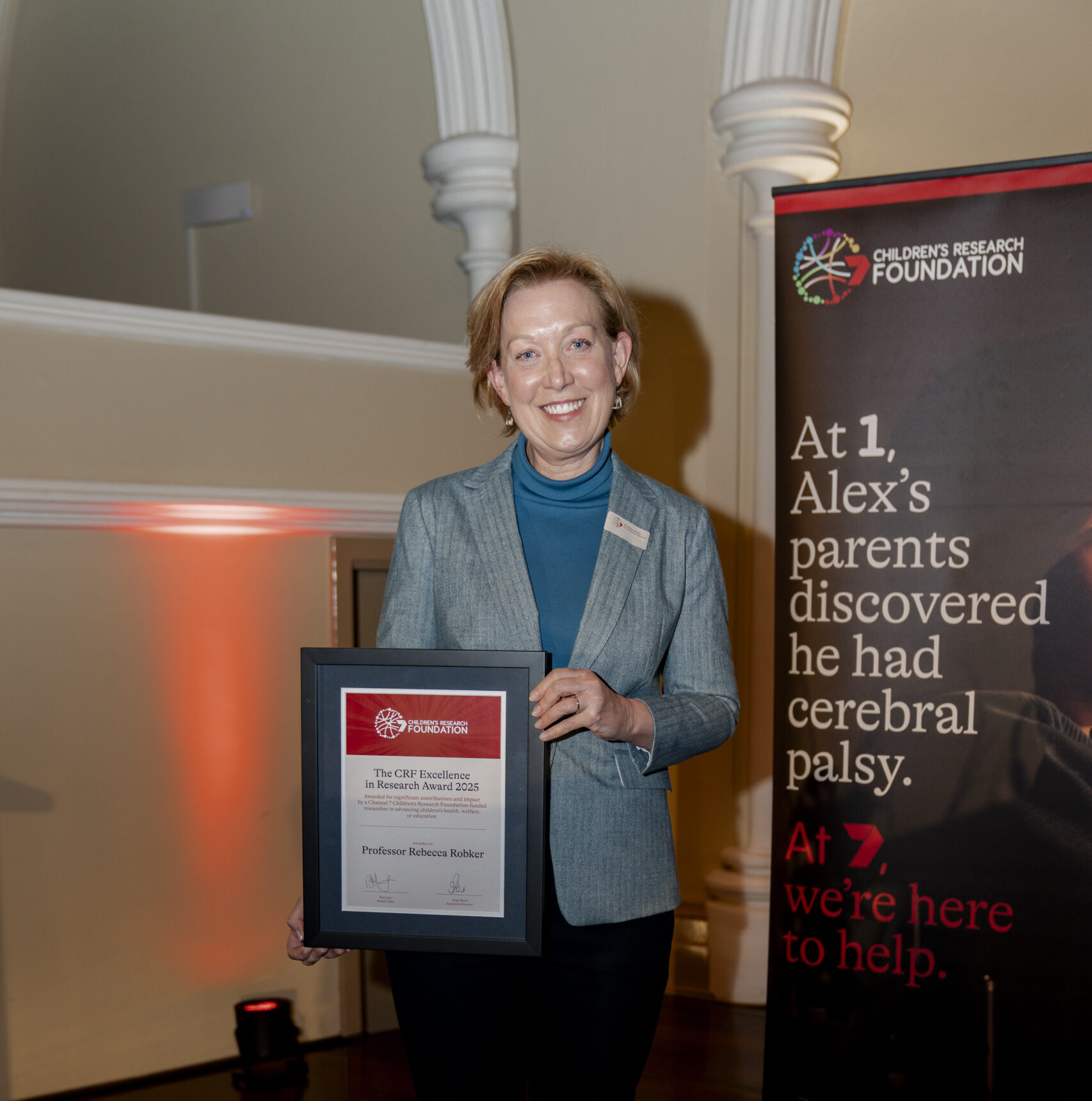
Awarded the Excellence in Children’s Research winner in 2025 at the Foundation’s annual grant awards, Robker has spent much of her career investigating the very beginnings of embryonic life and how events before and immediately after conception can influence health decades later.
But her team’s now high-profile research into PFAS – the so-called “forever chemicals” found throughout the environment – began almost by accident.
The mystery of the dying embryos
In 2019, Robker’s laboratory was conducting IVF experiments with mice when something inexplicable started happening.
“All of the students were like, ‘The eggs are dead and the IVF is not working. All the embryos are failing to grow and are dying. We don’t understand what is happening,’” Robker recalls.
For almost 10 months, students and researchers tried to solve the mystery.
Had something changed in the animal facility? Was it the bedding? The food? Construction work? Stress?
Then PhD student Yasmyn Winstanley was in the laboratory early one morning after yet another failed experiment.
“She was basically crying in the hall at seven in the morning,” Robker says.
Jean Bergen – the building custodian – stopped and asked if she was OK. Winstanley explained the saga and said that they had tried everything, and then, almost in passing, that it was almost like the problem must be “the water or something”.
Jean’s response changed the course of their research. “Don’t you know there’s a problem with the water in this building?” she asked.
Another researcher had been experiencing problems with the building’s water corroding laboratory equipment. Suddenly, Robker’s team had a new lead.
They discovered mice newly delivered to the facility produced healthy eggs and embryos – but after spending time in the building, their egg quality deteriorated dramatically.
Side-by-side experiments comparing water from different university buildings produced starkly different results. When the problematic water was carbon filtered, the detrimental effect disappeared.
The researchers detected higher levels of PFAS in the water from the affected building, but those initial observations alone couldn’t establish what was causing the problem.
They needed to conduct a rigorous study.
The funding that changed everything
Support from Firefly gave Robker and her collaborators the opportunity to do exactly that – properly investigate how PFAS exposure was affecting reproductive biology and female fertility.
That research helped open an entirely new direction for a laboratory that had previously concentrated largely on other medical areas including obesity and maternal age.
Robker says funding is particularly powerful because it provides researchers with the seed money needed to pursue an idea, generate evidence and build the case for larger grants.
“It’s the seed funding from you guys that helps us get national funding,” she says.
“It gives you that seed funding to start these bigger collaborations and attract money that can sustain the project for years. That’s super important.”
— Professor Rebecca Robker
The PFAS work has since generated extraordinary interest.
Following a 7NEWS Adelaide story on her research, Robker says inquiries came from across Australia – from community radio and magazines to people discussing the findings on social media.
“I’ve never before had so many people reaching out and wanting more information,” she says.
The research then travelled considerably further.
Robker contributed to a Federal Senate inquiry examining PFAS and other emerging environmental health concerns, with a particular focus on human and women’s health.
She was subsequently invited to appear as an expert before senators when the inquiry visited Adelaide, before members of the committee came into the laboratory to see the research firsthand.
“To have these senators come … they asked so many questions. They spent so much time with us,” Robker says.
“By providing these kinds of answers and by providing data, that is what convinces them to do more.”

The first five days
For Robker, however, PFAS is one part of a much bigger scientific question: how can events at the very beginning of life shape our health many decades later?
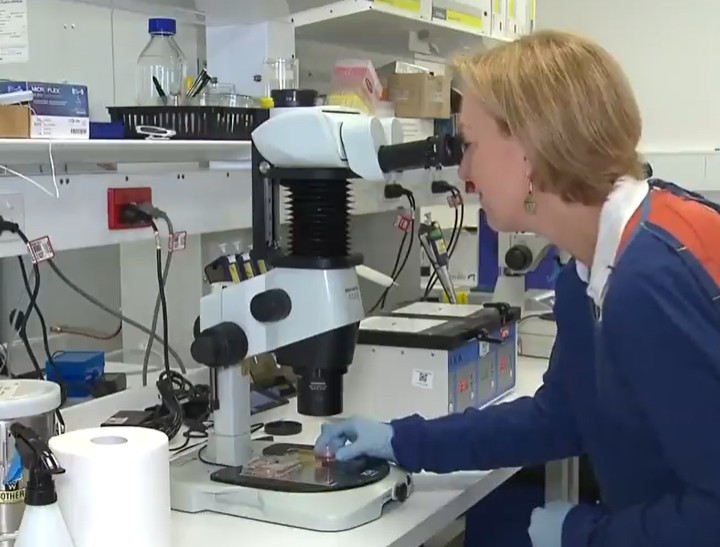
Her laboratory is examining what happens at the cellular level in eggs and embryos, including changes to DNA and telomeres – the protective structures at the ends of chromosomes that are associated with the way cells age.
Some of those critical processes are occurring within the first five days of an embryo’s development.
“How your DNA gets modified in those first five days to the blastocyst stage determines how long your telomeres are, and that does influence how resilient your cells are to the challenges they’re going to have throughout the rest of life,” she says.
It is why Robker believes research at the very beginning of life can ultimately have profound implications for children’s health – and for the adults they will one day become.
And it’s also why she remains such a passionate advocate for investing in discovery research, where the eventual destination isn’t always apparent when the first question is asked.
For Robker, there are still many questions to answer – particularly about when exposure to PFAS is most harmful and what it is doing to our cells.
But after a career spent studying the very earliest stages of embryo development, she remains fascinated by just how much those first days can matter to lifetime health.
“I think it’s almost poetic how it happens” she says. “The start of life determines end of life.”
— Professor Rebecca Robker