




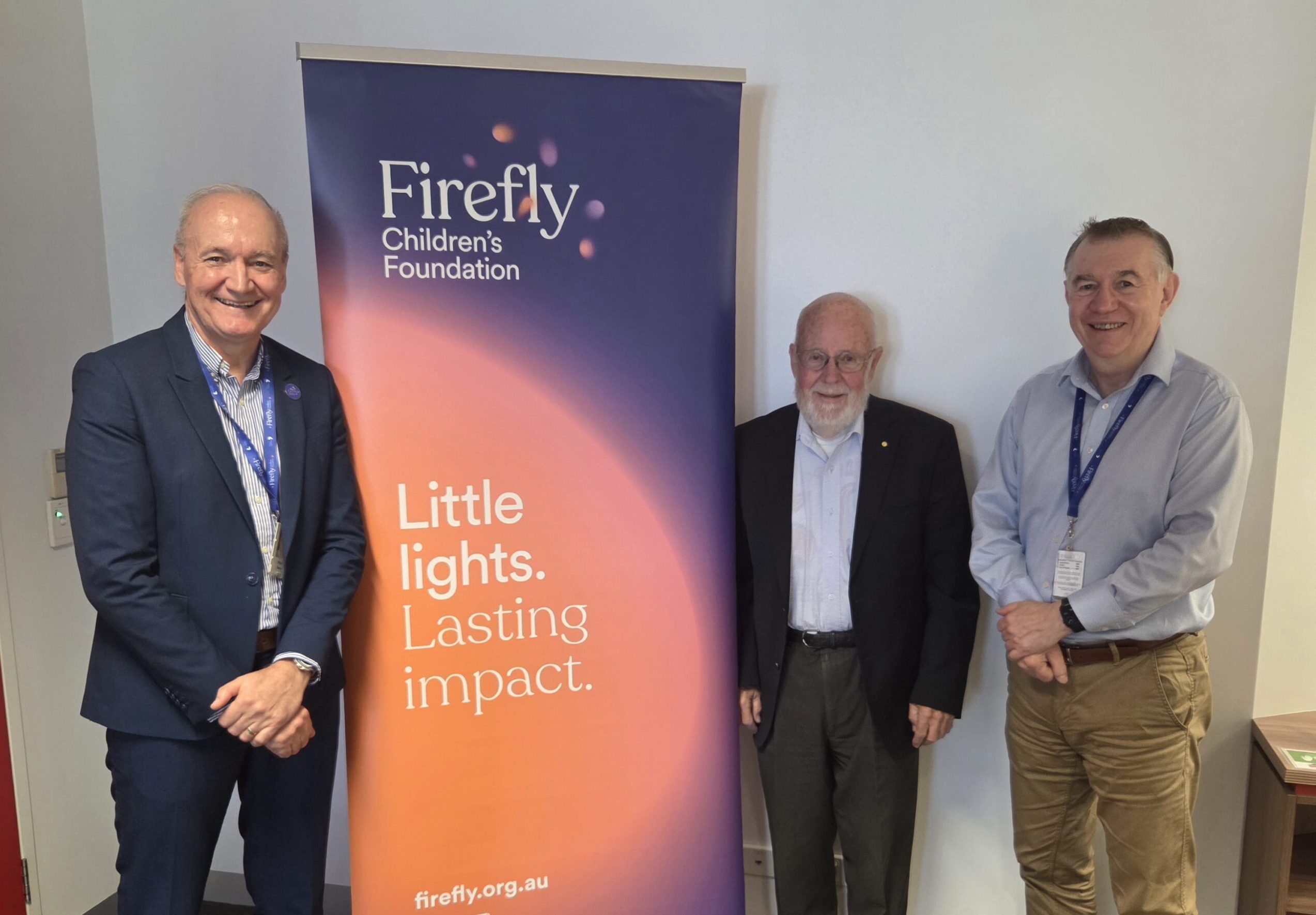
The world of genetics has a group of unruly schoolchildren to thank for Professor Grant Sutherland choosing science over teaching.
Growing up on a farm in country Victoria, money was tight. University was only possible for the future internationally renowned geneticist after he secured a scholarship to become a secondary school teacher.
There was just one slight problem. At the beginning of the third year of his science degree, Sutherland was sent into a high school for three weeks of teaching experience.
“I seemed to spend a lot of time yelling at kids for running in corridors and other things like that,” he says, with a laugh.
“I decided, ‘That is not for me’.”
It turned out to be an extremely fortuitous decision.
Sutherland instead found a job in a tiny Melbourne laboratory looking at chromosomes, beginning a journey that would take him to Edinburgh, and then Adelaide, where his pioneering work would transform the understanding and diagnosis of Fragile X syndrome and take him to the forefront of human genetics.
The grant that “started my whole career”
And along the way, one of the fledgling Channel 7 Children’s Research Foundation’s early grants would help get that remarkable career underway.
Sutherland was awarded his first grant from the Foundation – now Firefly Children’s Foundation – in 1978. He went on to receive a further two grants.
“It really started my whole career.”
— Professor Grant Sutherland
At the time, however, the young scientist wasn’t contemplating international recognition. Research funding was notoriously difficult to secure and the Foundation simply “seemed like a good way of getting a bit of money to keep going”.
And that money meant something enormously valuable to a young researcher – another pair of hands.
While Sutherland had been promised he could devote half his time at the then Adelaide Children’s Hospital to research, the funding allowed him to employ people to help with the work.
“It really made a difference,” he says. “It increased the rate at which things could happen.”
And things certainly began to happen.
An unexpected discovery
When Sutherland arrived at the Adelaide Children’s Hospital on January 2, 1975, fresh from completing his PhD and working at Edinburgh’s Royal Hospital for Sick Children, he admits he “didn’t have a clue” what he was going to research.
Then he noticed something unusual.
“I found some chromosomes with fragile sites and I thought, ‘Oh, that’s interesting’.”
— Professor Grant Sutherland
“There was very, very little in the scientific literature about this, so I thought, ‘I’ll see what I can do’.”
That curiosity would lead to the work for which Sutherland became internationally renowned.
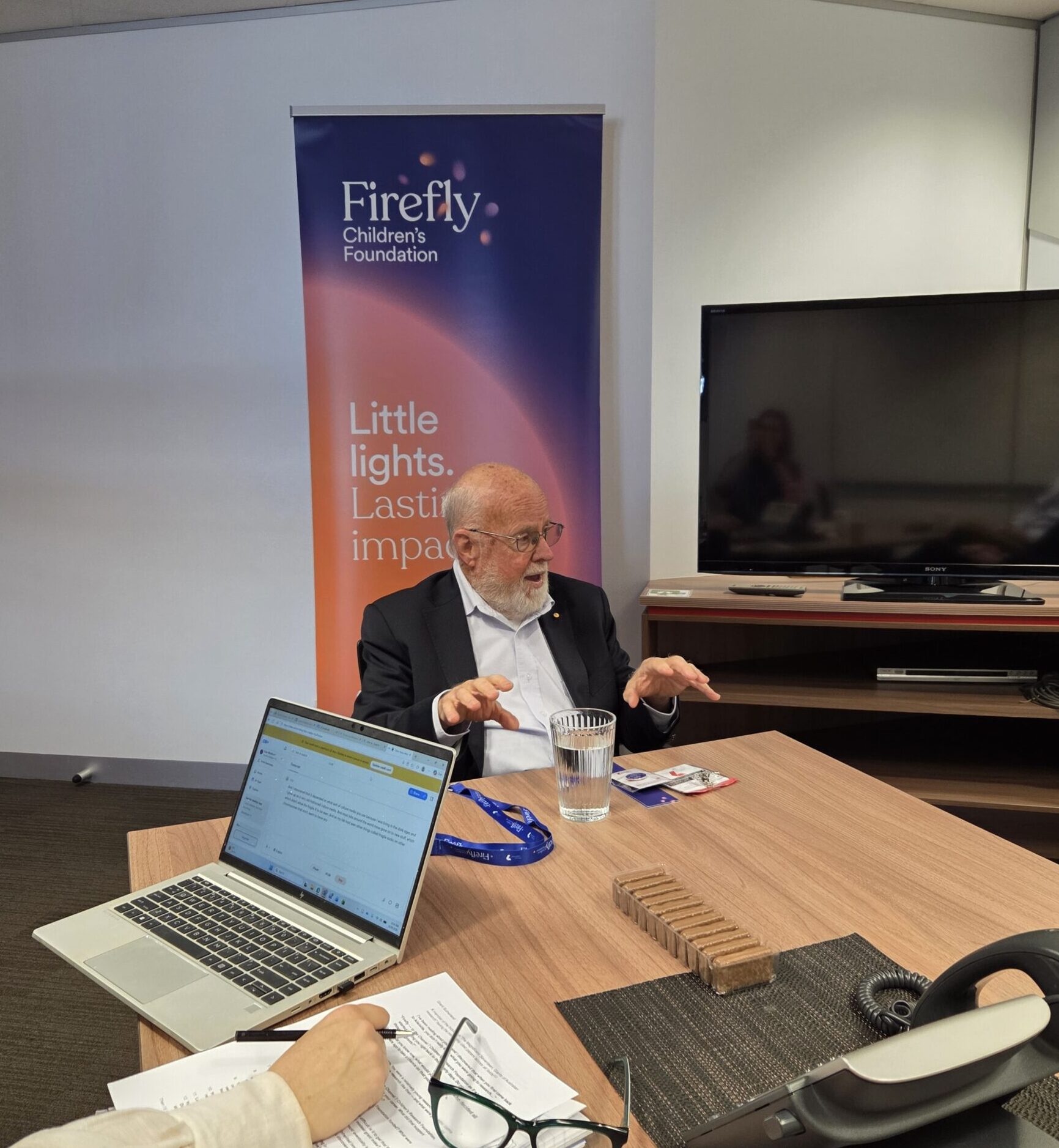
“Most of the labs had gone on to new stuff which didn’t allow Fragile X to be seen – but I was living in the dark ages and I was using a very old-fashioned culture media,” he shares.
As it happened, those old-fashioned methods created the laboratory conditions needed to reliably reveal fragile sites on chromosomes, ultimately leading him to Fragile X syndrome, an inherited genetic condition and cause of intellectual disability.
His research group went on to help identify the genetic mechanism behind Fragile X, enabling more accurate diagnosis, carrier testing and prenatal testing.
What began with four people at the Adelaide Children’s Hospital eventually grew into a group of 85 researchers and diagnostic staff at the renamed Women’s and Children’s Hospital.


From Adelaide to the Human Genome Project
Sutherland’s work would also take him into the Human Genome Project – an international effort to map and sequence the human genome.
Not everyone thought it was worthwhile.
“There was a certain group that said, ‘Oh, this is just a waste of time. Why would we want to know [the sequence] for millions of base pairs? This is just a lot of people amusing themselves’,” Sutherland recalls.
“It was good to be on the other side of that argument … this is a fundamental understanding of how humans develop and how genetic diseases may be sorted out.”
Sutherland would eventually serve as president of the Human Genome Organisation – just one achievement in an extraordinary career in genetics.
A career that changed genetics
But Sutherland is characteristically modest about his remarkable career.
“I think I had a lot of luck and was in the right place at the right time,”
— Professor Grant Sutherland
And while he admits it is satisfying to occasionally sit back and think, “Hey, I didn’t have a bad career”, the recognition has never mattered as much as what the science achieved for patients and families.
Fragile X remains the work of which he is proudest.
“If I had a name in science for doing something, it was finding out initially how to find Fragile X with any degree of reliability,” he says.
Why early research funding still matters
Today, almost half a century after that first Foundation grant, Sutherland believes backing researchers at the beginning of their careers is arguably even more important.
The freedom he was given in 1975 – half his working week specifically set aside to pursue research – is a luxury few young scientists enjoy today.
Research grants can buy them something precious: the people and time needed to follow an idea and discover where it might lead.
“They certainly can make a difference,” Sutherland says.
It is something his own remarkable career demonstrates. When the Channel 7 Children’s Research Foundation backed Sutherland in 1978, no one could have predicted where that early investment might lead.
Sutherland certainly didn’t. Asked what he would tell the young scientist who arrived at the Adelaide Children’s Hospital in 1975 with no idea what he was going to research, he laughs.
“Without the knowledge that I have now, I wouldn’t have a clue,” he says.
“I would have said, ‘What you do will probably be interesting because you wouldn’t want to be doing boring research. You’ve got to be lucky and enjoy it, and you might find something interesting’.
“I don’t have a crystal ball.”
Fortunately, he followed his curiosity anyway.